
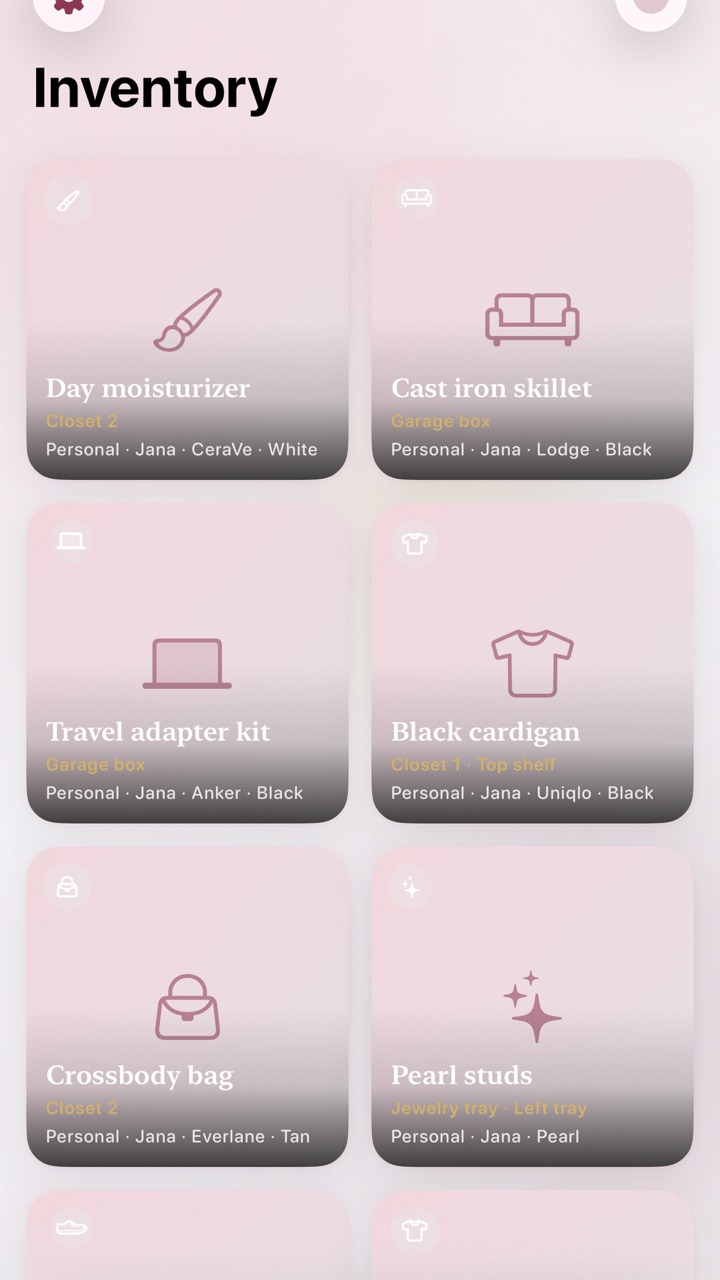
A home inventory can sound like a huge job: every room, every drawer, every small thing. It doesn’t have to be. A useful inventory is simply a record that helps you answer questions such as “Do I own one already?”, “Where did I put it?” or “When can I still return it?”
The easiest way to begin is to make a small record you’ll actually keep using. You can add the rest later—or not at all.
1. Start with a real friction point
Think about what you most often search for, forget you already own, or wish you could find a detail about. That might be a favorite sweater, a tool, a keepsake, or the box of cables you only open twice a year.
Begin there. An inventory built around a recurring annoyance is easier to maintain than one built around an abstract goal to “organize everything.”
2. Choose one small area
Pick a shelf, one drawer, a section of your wardrobe, or a single storage box. Give yourself a natural stopping point. Ten useful entries are a better start than a sprawling list you never want to update.
If an item is already in front of you, capture it then. There is no need to empty a room or interrupt the way you use your home.
3. Record where it lives—in words you’ll recognize
“Hall closet, top shelf” is more helpful than a category label that means something only to the app. Name places the way you naturally describe them: a closet, drawer, cabinet, shelf, garage bin, or suitcase.
Keep the location specific enough to help you find the item, but not so detailed that every move creates a chore. If something changes places, update the location when you next look it up.
4. Save details you may need later
For each item, ask what future-you might want to know. A photo can help identify a similar-looking item. A purchase date, return deadline, or warranty detail may matter for something you recently bought. A short note can explain which charger or accessory belongs with it.
Skip fields that do not help you find, recognize, or look after the item. The point is to reduce remembering—not to create paperwork.
5. Keep the habit light
Add things as you put them away, unpack a purchase, or notice that you searched for something again. Every few weeks, correct the locations you know have changed. You do not need to audit the entire home on a schedule.
Some areas will deserve a fuller record; others may never need one. Let the inventory reflect how you live.